In this world, but…..


not of this world


Almost everyone we have met has wanted to fit into a social group.   The desire for friends intensifies during school and continues all the way through adulthood. Often, the desire to be accepted leads us to conform to speak, dress, act a certain way, all with the goal of being an accepted member of the “group”.

As global workers we struggle with fitting in anywhere.  If we are in our country of calling, it might be because we speak the language with an accent. It could also be that we look different, or have daily habits that seem strange to others.
When we return to our passport and supporting country, we also don’t quite fit in.  We haven’t kept up with the lingo, the styles, the pop culture.  We need to share our stories and our ‘why we go’ with that base of supporters.  Figuring out how to do it when you don’t quite fit in can be a challenge. 

Choosing to follow Christ comes with similar struggles, but in reverse. You might lose bonds with family and friends, with co-workers, with your community. This is one of the reasons why we need the local church: a tribe where all of the misfits of the world can belong, where we can espouse not having this world’s values. We can learn to care for one another and for others desiring to belong.

Because of the generosity of the sending church, there are now two brand new groups meeting, working with each others to live like residents of God’s Kingdom.  In Tlaxcala, they very well will face persecution.  Their electricity might get cut off, or they might lose their jobs.  Why?  Because they no longer act like those that are of the world.  They have made Jesus their friend, their Savior, their Boss. 

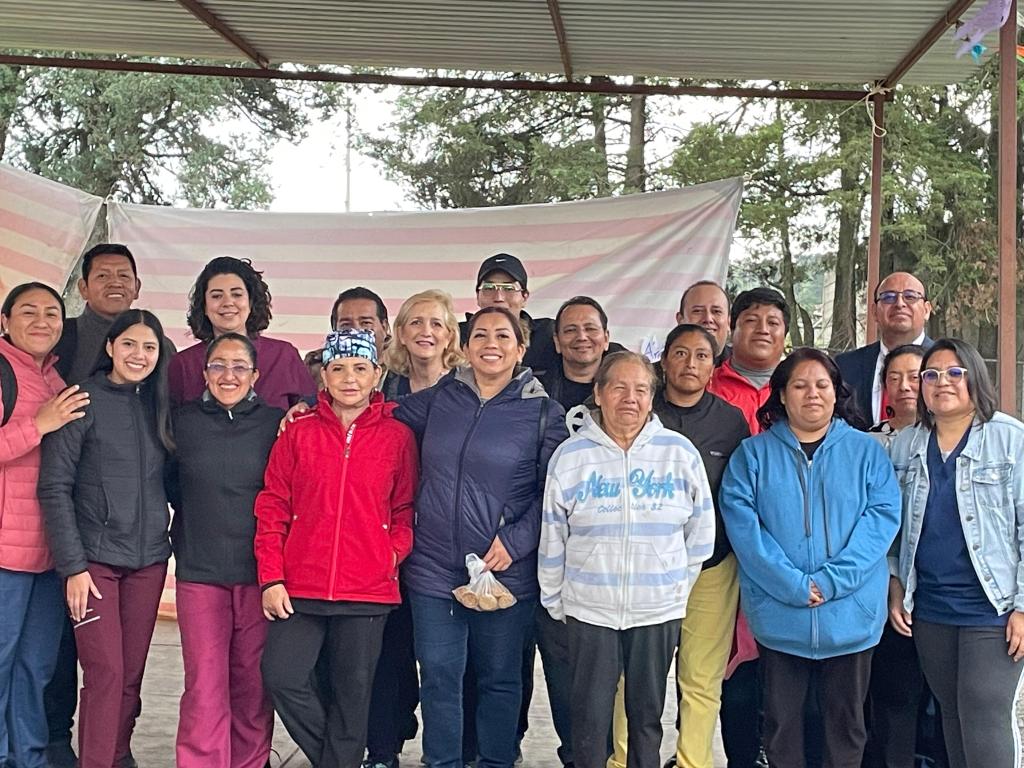
Coming up at the end of January in 2026, we will be joining a Mexican medical team to help a local Mexican missionary start a new church in an area on the border of Oaxaca and Veracruz that is unreached, unengaged.  Not only will physical health needs be met, but spiritual ones will be as well.  The team is composed of doctors, nurses, dentists and ministers.  The goal is to be that good and faithful servant who treats each person the way God would treat them.  After all, we bear His Image, His Character.

We continue as well to help student leaders provide a safe place where others on their campuses can gather and form communities of belonging. 

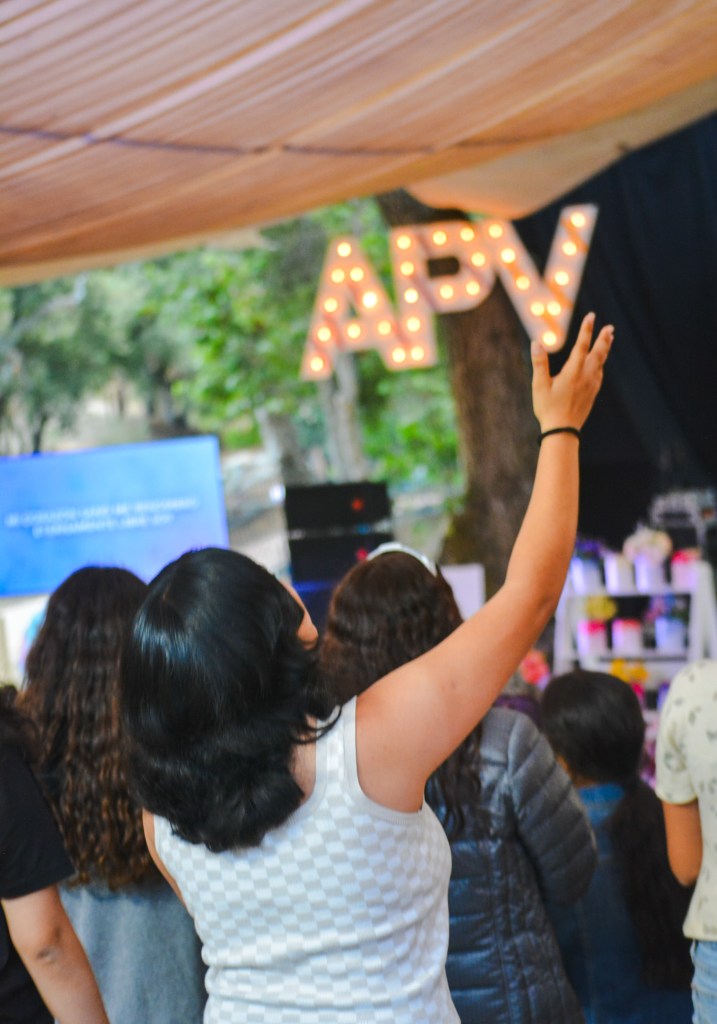
We remain active in helping APV camps in different parts of Mexico.  These in particular are the projects that require the most financial help, as our goal is to provide a wonderful exciting space where each person can find safety in sharing their story of trauma with people who will be confidential and walk with them a path of healing.  Each camp costs approximately 12,000 dollars to be put on.  A large part of that budget is sponsoring young individuals who would otherwise never be able to attend.

Thank you to all who have a part in seeing people in Central Mexico live out their redemptive story.

The silence between light and sound


It is a well known law of physics:  Light travels much more quickly than sound.  We must wait to hear what we can see.

Did the people in Bethlehem see the light in the heavens before they heard a brave mighty warrior of a woman groan, or cry, as she passed a robust baby through her virgin birth canal? 

Did the Heavens remain hushed as they watched that infant take a deep breath and let out a lustful cry- one that signifies health and life- Apgar scores of 10 and 10? 

Did the shepherds see the host of angels before the choir broke out in adoration?

Sometimes global workers labor in what seems to be a long period of silence… waiting.  We can see what Jesus has done.  We have a vision of what He will do.   Yet, we might not hear the rejoicing right away. We have in the past, and we are confident that we will in the future. 

We see on the horizon opportunities to continue to show pastors and ministers new ways to learn and apply God’s Word, to defend victims of abuse, to model to university students the joy, hope and peace of a new identity in Christ.  Our hope lies in hearing those testimonies.

Right now we are waiting for the remainder of our cash budget to show up.  Our plan is to return to Mexico City by the end of January.   In this season of Advent, we might appear silent, waiting for a sign that we can return.  To those who have given, whether it has been recently or faithfully for almost 35 years, trust us, there is loud rejoicing in the Kazim house. 

Thank you for praying.
Thank you for giving.
Thank you for your friendship.

To all who are in a period of waiting, may God reveal Himself in miraculous Christmas ways.

Paul and Sandy
December 2024


Es una ley de la física bien conocida: la luz viaja mucho más rápido que el sonido.  Tenemos que esperar para escuchar lo que podemos ver.

La gente de Belén - ¿vieron la luz en los cielos antes de escuchar a una mujer valiente, poderosa guerrera, gemir o llorar mientras pasaba a un bebé robusto a través del canal de parto virginal? 

¿Los Cielos permanecieron en silencio mientras observaban a ese bebé respirar profundamente y dejar escapar un llanto a todo volumen , uno que significaba salud y vida, con puntuaciones de Apgar de 10 y 10?

¿Vieron los pastores la hueste de ángeles antes de que el coro estallara en adoración?

A veces, trabajadores globales laboran en lo que parece ser un largo período de silencio... esperando. Podemos ver lo que Jesús ha hecho. Tenemos una visión de lo que hará. Sin embargo, es posible que no escuchemos el regocijo de inmediato. Lo hemos hecho en el pasado y estamos seguros de que lo haremos en el futuro.

Vemos en el horizonte oportunidades para continuar mostrando a pastores y ministros nuevas formas de aprender y aplicar la Palabra de Dios, defender a las víctimas de abuso y modelar a los estudiantes universitarios el gozo, la esperanza y la paz de una nueva identidad en Cristo. Nuestra esperanza está en escuchar esos testimonios.

En este momento estamos esperando que aparezca el resto de nuestro presupuesto. Nuestro plan es regresar a la Ciudad de México a finales de enero. En esta temporada de Adviento, podemos parecer silenciosos esperando una señal de que podemos regresar. Para aquellos que han dado, ya sea recién o fielmente durante casi 35 años, créannos, hay un gran regocijo en la casa de los Kazim Woodworth.

Gracias por orar.
Gracias por dar.
Gracias por la amistad.

A todos los que se encuentran en un período de espera, que Dios se revele de manera milagrosa en esta Navidad.

Pablo y Sandra
diciembre, 2024


One of the most secret crimes ever…..

It happened to Sarai, Hagar, Tamar, and to Dinah.  It is an exploitation of power. It strips victims of their dignity, distorts their identity, and robs them their security.  It has life long consequences.   Abuse.  It is  pervasive in every nation and people group,  rarely talked about in a public forum, and  a well kept secret in many families.  It happens in all walks of life, in all classes of society, in ministers’ homes and in the homes of lay people.  Revealing it, talking about it, remembering it can produce even more shame.  So the enemy encourages victims to cover ups, to hide and to continue fearing retaliation and/or blame. The abuse remains in the darkness.   The principalities of this world will stop at nothing to make sure that a victim doesn’t find their identity and freedom in the only true Redeemer,  the One who is acquainted with this kind of grief,  the One who had no beauty or majesty attracted to him, the One who was despised and rejected. 

It was thrown in our faces the second we became full time global workers.  It manifested itself in a myriad of ways- from treating human beings as animals, to a desperate search for love and kindness in all the wrong places, to allowing difficult situations in life trigger a need to regain the control now lost. The victim searches for someone else to hurt.  I have yet to meet a victim whose abuser wasn’t abused themselves. 

Victims of abuse need a safe place and opportunities where they can begin to open up and peel back the layers of shame.  Telling your story is the first step toward finding freedom from shame.  Experiencing God in all of His fullness empowers you to find dignity, security and the ability to begin the process of forgiveness, first with yourself, then with God and others.  Telling your story holds abusers accountable for their actions, but also help them see how they too, can be redeemed.

We feel humbled to be called by our broken and yet victorious God to provide soul care to victims, and help them substitute unhealthy patterns for eternal-full-of-life patterns as they process shame and guilt.  Soul care happens in a myriad of ways.  I, Sandy, just got back from a camp where hundreds of young women have an opportunity to listen to the stories of victims and begin to process their own story, many for the very first time.   If you want to know more about this camp, you can visit their social media pages.  They are known as APV.  

With each opportunity to teach, whether in our sending district or in Mexico, many more victims are coming forward with their stories, yearning for healing.  What a privilege to be able to help them understand that God created us all with the ability to bear His image, that He sees beauty and dignity and honor in a world that tells victims of abuse they have lost theirs. 

We get to remind everyone with whom we build relationships, from the neighbor, to the local shop owner, to the university student, to pastors and their families, that they are not alone in this journey, and that redemption is available to us all.  And we hope you will join us in seeing APV camps happen all over Mexico. 

To give an offering towards this endeavor, you can click on the following link and go to class 40, Girls camp. 

https://giving.ag.org/donate/600001-243357?class=40


Our next camp will be in Puebla this coming February – another opportunity to restore the honor that the enemy wants so badly to turn into shame, and build instead, foundations of eternal health, freedom and joy.


Uno de los crímenes más secretos…… 

Le sucedió a Sarai, a Agar, a Tamar, a Dina. Es una explotación del poder. Quita a víctimas su dignidad, distorsiona su identidad y roba su seguridad. Tiene consecuencias de por vida. Abuso. Se manifiesta en toda nación y grupo, rara vez se habla de él en un foro público y es un secreto bien guardado en muchas familias. Sucede en todos los ámbitos de la vida, en todas las clases sociales, en los hogares de ministros y en los hogares de laicos. Revelarlo, hablar de ello, recordarlo puede producir aún más vergüenza. Por eso, el enemigo alienta a l@s víctimas a encubrir, a esconderse y a seguir temiendo represalias y/o sentir culpa. El abuso permanece en la oscuridad. Los principados de este mundo no se detendrán ante nada para asegurarse de que el/la víctima no encuentre su identidad y libertad en el único Redentor verdadero, Aquel que está familiarizado con este tipo de dolor, Aquel que no tenía belleza ni majestad que lo atrajera, Aquel que fue despreciado y rechazado.

Nos lo echaron en cara en el momento en que nos convertimos en trabajadores globales. Se manifestó de mil maneras: desde tratar a los seres humanos como animales hasta una búsqueda desesperada de amor y ternura en lugares equivocados, permitiendo que las situaciones difíciles de la vida desencadenen la necesidad de recuperar el control que se había perdido. El/la víctima busca a alguien más a quien lastimar. Hasta la fecha no conozco a ningún/a víctima cuyo abusador/a no haya sido abusado/a.

L@s víctimas de abuso necesitan un lugar seguro, y oportunidades donde puedan comenzar a abrirse y pelar las capas de vergüenza. Contar su historia es el primer paso para encontrar la libertad de esta vergüenza. Experimentar a Dios en toda su plenitud le permite encontrar dignidad, seguridad y la capacidad de comenzar el proceso de perdón, primero con uno mismo, luego con Dios y los demás. Contar su historia responsabiliza a los abusadores por sus acciones, pero también los ayuda a ver cómo ellos también pueden ser redimidos.

Nos sentimos honrados de ser llamados por nuestro Dios, quebrantado pero victorioso, para brindar cuidado del alma a l@s víctimas y ayudarlos a sustituir patrones no saludables por patrones de vida eterna mientras procesan la vergüenza y la culpa. El cuidado del alma se da de muchas maneras. Yo, Sandra, acabo de regresar de un campamento de jóvenes donde cientos  tienen la oportunidad de escuchar las historias de víctimas y comenzar a procesar su propia historia, muchas por primera vez. Si quiere saber más sobre este campamento, puede visitar sus páginas en las redes sociales. Se les conoce como APV.

Con cada oportunidad de enseñar, ya sea en nuestro distrito de envío o en México, muchos más se nos acercan con sus historias, anhelando sanidad. Qué privilegio poder ayudarles a entender que Dios nos creó a todos con la capacidad de llevar Su imagen, que Él ve belleza,  y honor y dignidad en un mundo que les dice al víctima de abuso que han perdido la suya. Podemos hacer ver a todos con quienes construimos relaciones, desde el vecino hasta el dueño de la tienda local, el estudiante universitario, los pastores y sus familias, que no están solos en este viaje, y que la redención está disponible para todos nosotros.

Seguimos con la visión de ver un campamento como APV en cada región de México.
Para hacer una donación a este proyecto, puede hacer clic en el siguiente enlace e ir al campamento de niñas (clase 40).

https://giving.ag.org/donate/600001-243357?class=40

Nuestro próximo campamento será en Puebla el mes de febrero: otra oportunidad para restaurar el honor que el enemigo tanto quiere convertir en vergüenza y construir en su lugar cimientos de salud eterna, libertad y gozo.

Family

You know that 70’s song written by Stephen Stills- if you can’t be with the one you love, love the one you’re with.    Catchy tune, easy to sing.  However, when you stop and think about the lyrics, it implies unfaithfulness.  You are separated from the one you love.  Instead of feeling all down in the dumps, find the person right next to you and love them instead. 

But in God’s design, His purpose is for His family to grow, and in that growth you learn how to love more people all the while being faithful to those you first began to love. 
Family.  It’s what God is about.  Before He designed the world, He adopted us and gave us purpose.  Ephesians does a mighty fine job of explaining how that all happens.

As we learn to live in different places, speak different languages, learn different customs and traditions, our family grows.  We also become an extension of a family that sends us to those different places, and new families are formed. They become part of an extended family to our senders as well.

We are so grateful for all of the family we have gained these past three years.  We have Mexican neighbors who are very much our family.  We are abuelitos to their son.  We have university students who look forward to getting together because a familiar bond has been established.  We have colleagues that show up in the good and bad times, who cry and rejoice with us. 

We have a new granddaughter just born this June.  Her name is Aurora.  She is the morning sun in our lives and represents a future of blessing for others, because that is God’s mission for our lives- that through us all of the families of the world will be blessed. 

Many have been faithfully supporting us for a long time.  We consider you all family. We represent all of you as we point others to Jesus, the Creator and Author of all of the families of the world. So yes, we will love the one we are with.  But we will also love the ones who might not be with us physically, but are very much present in our lives. And for those of you living in California who support us, we will be in the area August through December of this year, and would love to have an opportunity to thank you in person and share with you how you are being represented in the center of Mexico. 

Our Red University family


Hay una canción en inglés de los 70 que dice: si no puedes estar con la persona que amas, ama a la persona con la que estás.   La música pega, y es fácil de cantar.  Sin embargo, cuando te paras a pensar en la letra, implica infidelidad.  Estás separado de quien amas.  En lugar de sentirte deprimido, encuentra a la persona que está a tu lado y ámala.

Pero en el diseño de Dios, Su propósito es que Su familia crezca, y en ese crecimiento aprendes a amar a más personas y al mismo tiempo ser fiel con aquellos a quienes empezaste a amar desde un principio. 

Familia.  De eso se trata Dios.  Antes de diseñar el mundo, nos adoptó y nos dio un propósito.  La carta a los Efesios hace un excelente trabajo al explicar cómo sucede todo eso.

A medida que aprendemos a vivir en diferentes lugares, hablar diferentes idiomas, conocer y aplicar diferentes costumbres y tradiciones, nuestra familia crece.  También nos convertimos en una extensión de una familia que nos envía a esos lugares diferentes. Formamos nuevas familias y ellas también se convierten en familia extendida para nuestros remitentes. 

Estamos muy agradecidos por el aumento de familia en estos últimos tres años.  Tenemos vecinos mexicanos que son en gran medida, nuestra familia.  Somos abuelitos para su hijo.  Tenemos estudiantes universitarios a los que les encanta que nos reunamos,  porque se ha establecido un vínculo familiar.  Tenemos colegas que aparecen en las buenas y las malas, que lloran pero también se alegran con nosotros.

Se nos acaba de nacer una nueva nieta.  Su nombre es Aurora.  Ella es el sol de la mañana en nuestras vidas y representa un futuro de bendición para los demás, porque esa es la misión de Dios para nuestras vidas: que a través de nosotros todas las familias del mundo sean bendecidas.

Muchos nos apoyan fielmente desde hace un buen tiempo.  Los consideramos a todos familia. Los representamos mientras ayudemos a otros a que pongan su mirada en Jesús: el Creador y Autor de todas las familias del mundo.

Así que- sí, amaremos a aquel con quien estamos.  Pero también amaremos a aquellos que quizás no estén con nosotros físicamente, pero que están muy presentes en nuestras vidas. 

Y para aquellos de ustedes que viven en California y que nos apoyan, estaremos allí de agosto a diciembre de este año y nos encantaría tener la oportunidad de agradecerles en persona y compartir con ustedes cómo están siendo representados en el centro de México.  

Pain

Pain can separate or unify, strengthen or weaken.
Pain can signify disease or healing.

Did God create pain? I don’t know. Would brittle diabetics have horrible foot ulcers if they were able to feel pain well? Would a leper have gangrene set in if he or she had felt pain to begin with?
Would we cry out to God if we didn’t experience pain?
Would we have forgiveness of sins if the Lamb did not take on those sins? Would He understand our suffering if He had not experienced pain?

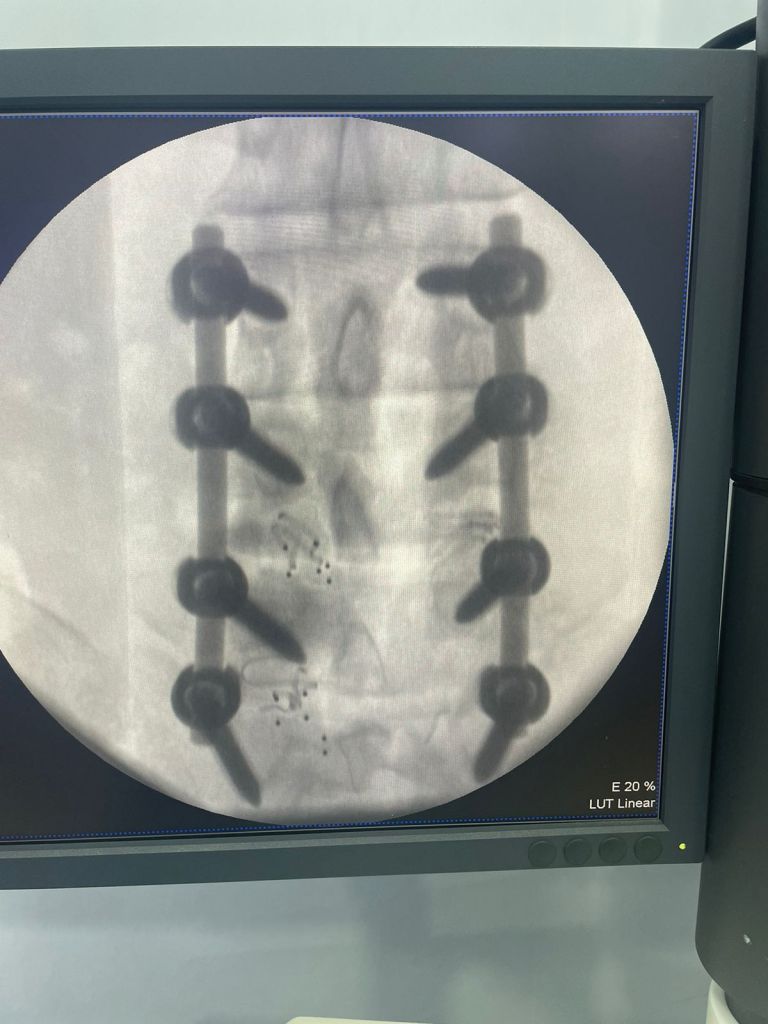
Ten days ago Paul had extensive surgery to correct degenerative disc disease. This involved the placement of spacers between the discs and the insertion of 8 titanium screws. He walks with more pain now than before surgery, but it is supposed to be a good pain- one that leads to recovery and increased strength.

It is this pain that led Sandy to share with her university students her anxiety surrounding the surgery and recovery for Paul, and that led them to reach out and say thank you for being vulnerable. It validated their pain and struggles. It stimulated a conversation that having God in our lives does not necessarily remove pain. It might even mean, in some cases, that pain will increase. What it certainly does is help us recognize that His pain is the proof of His love for us, His presence with us, His Hope for an eternity without pain.

In these past two weeks, not only has Paul experienced tremendous pain in his body, but we have been made aware of significant pain in the family of God across the nation of Mexico. Just one example are Antonio and Justine. They are global workers, and have dedicated their lives to bear God’s image in very difficult places of the world. Antonio is battling pancreatic cancer now, and has had a very rough two weeks. They have young children who are living their own pain as they watch their dad suffer.

May our pain unify. May the Body of Christ be strengthened through prayer as we uphold each other in our moments of pain. May we experience His resurrecting power in a myriad of ways, and bring hope to the weary soul.

Once again, we understand the value of prayer, and the sacrifice with which each of you gives that allow us to continue to live and work in Central Mexico. We remain grateful. We would appreciate that you continue to pray for Antonio, and for Paul.

May the God who experienced pain comfort, strengthen, heal and bring hope to each of your lives.

May we celebrate His death and Resurrection every day.

Paul and Sandy

El dolor puede separar o unir, fortalecer o debilitar.
Puede significar enfermedad o un proceso de sanación.

¿ Creó Dios el dolor? No lo sé. ¿Los diabéticos frágiles tendrían horribles úlceras en los pies si pudieran sentir bien el dolor?
¿Tendría gangrena un leproso si hubiera sentido dolor desde el principio?
¿Clamaríamos a Dios si no experimentáramos dolor?
¿Tendríamos perdón de pecados si el Cordero no tomara en sí esos pecados? ¿Entendería nuestro sufrimiento si no hubiera experimentado dolor?

Hace diez días, Pablo se sometió a una cirugía extensa para corregir una enfermedad degenerativa del disco lumbar y sacro. Esto implicó la colocación de espaciadores entre los discos y la inserción de 8 tornillos de titanio. Ahora camina con más dolor que antes de la cirugía, pero se supone que es un dolor necesario, y que conduce a la recuperación y a un mayor aguante.

Es este dolor el que llevó a Sandra a compartir con sus estudiantes universitarios su ansiedad en torno a la cirugía y la recuperación de Pablo. Nos agradecieron por mostrar vulnerabilidad y dio validez a su propio dolor. Provocó una conversación sobre el que tener a Dios en nuestras vidas no necesariamente elimina el dolor. Incluso podría significar, en algunos casos, que el dolor aumente. Lo que ciertamente hace es ayudarnos a reconocer que Su dolor es la prueba de Su amor por nosotros, Su presencia con nosotros, Su Esperanza de una eternidad sin dolor.

En estas últimas dos semanas, Pablo no solo ha experimentado un dolor tremendo en su cuerpo, sino que también hemos sido conscientes de mucho dolor en la familia de Dios en toda la nación de México. Sólo un ejemplo son Antonio y Justine. Son trabajadores globales y han dedicado sus vidas a portar imagen de Dios en lugares muy difíciles del mundo. Antonio ahora está luchando contra el cáncer de páncreas y ha tenido dos semanas muy difíciles. Tienen hijos pequeños que viven su propio dolor mientras ven sufrir a su padre.

Que nuestro dolor nos une. Que el Cuerpo de Cristo se fortalezca a través de la oración mientras nos sostenemos unos a otros en nuestros momentos de dolor. Que podamos experimentar Su poder de resurrección de innumerables maneras y llevar esperanza al alma cansada.

Una vez más entendemos el valor de la oración, y el sacrificio con el que cada uno de ustedes da y que nos permite seguir viviendo y trabajando en el Centro de México. Seguimos agradecidos. Mantengan a Antonio, y a Pablo, en sus oraciones.

Que el Dios que experimentó el dolor consuele, fortalezca, sane, y traiga esperanza a cada una de sus vidas.

Celebremos Su muerte y Resurrección todos los días.


Find that link.

Connection- all humans seem to search for it- whether it be animal or
human form, or acceptance into a certain group, or identifying a group in
which to belong. We see it everywhere- from social media follower
numbers to ennegram numbers to DNA associations.


The connections we establish speak volumes of who we are, how we
identify, with whom we identify. For God so loved the world, He chose to
place to one side His comfort, and identify as a human. He continues to
seek connection with us.


Shouldn’t we to do the same? Daily we challenge ourselves to find that
missing link- with our neighbors, with bank tellers, with university students,
with farmers, with people from other language groups, and other cultures.
Establishing what we have in common with them helps us to connect with
them. This enables us to present, in understandable ways, what God has
done for them and what He wants to continue to do through them.

A few weeks ago, we had a conversation with a friend who shared with us that his
Catholic father would accept his son’s desire to study theology if he also got a secular degree.
We find that to be wise advice. That son now holds an important job, but is also a youth pastor of a church here in Mexico City. He can connect with his colleagues at work as well as with kids trying find their own purpose in life. Two vocations wrapped up in one calling.

For those of you who don’t know us, Paul has a degree in Chemistry. He also has a degree in Theology and another in Cross Cultural Communication. Sandy has a degree in nursing and another in family medicine, but also studied Bible and pastoral counseling. Those degrees in
different fields have opened many opportunities to find that link, especially amongst
university students. Whether we are talking chemistry or anything health related, we can point back to the Creator and Original Designer of all things science.

This Christmas, we once again want to thank all of you for gifting us each day with the honor of representing you throughout all of Mexico. Ministry opportunities have taken us and continue to take us to different parts of this vast and beautiful country, and in each area, we use our life experiences, education, and life with Christ to look for common ground with the people
we meet.

Let’s not get complacent. Instead let’s get uncomfortable enough to learn
and grow and look for connection with people outside our familiar zones,
because that is exactly what God did.

We wish you a blessed Christmas and a new year of opportunities to
find those needed links.

Paul and Sandy Kazim

To contribute online https://s1.ag.org/kazim2

Encuentre eso que te conecte.

Conexión: todos los humanos parecen buscarla, ya sea de forma animal o humana, o
aceptación en un grupo determinado, o la identificación de un grupo al que quiere pertenecer.
Lo vemos en todas partes, desde los números de seguidores en las redes sociales hasta los
números de ennegrama, o en los enlaces del ADN.

Las conexiones que establecemos dicen mucho de quiénes somos, cómo nos identificamos y
con quién nos identificamos. Porque de tal manera amó Dios al mundo que decidió
despojarse de sí mismo e identificarse como ser humano.
Continúa buscando esa conexión con nosotros.

¿No deberíamos, nosotros hacer lo mismo? Diariamente nos desafiamos a encontrar eso que
nos falta para establecer un enlace: sea con nuestros vecinos, con el cajero, con estudiantes universitarios, con agricultores, con personas de otros grupos lingüísticos y otras culturas.
El encontrar lo que tenemos en común nos ayuda a establecer una linda conexión con ellos.
Esto nos permite presentar de manera entendible lo que Dios ha hecho por ellos y lo que quiere seguir haciendo a través de ellos.

Hace unas semanas tuvimos una conversación con un amigo que nos compartió que su
padre católico aceptaría el deseo de su hijo de estudiar teología siempre y cuando también
obtuviera una cédula profesional secular. Consideramos que es un consejo sabio. Ese hijo
ahora tiene un trabajo importante, pero también es pastor de jóvenes de una iglesia aquí en
la Ciudad de México. Es capaz de conectarse con sus colegas en el trabajo y con los jóvenes
que buscan encontrar su propósito en la vida. Dos vocaciones envueltas en un mismo
propósito.

Para los que no conocen esto de nosotros, Pablo tiene una licenciatura de ciencias en el
área de química. También estudió posgrados en Teología y un doctorado en Comunicaciones
Interculturales. Sandra tiene una licenciatura en enfermería y una maestría en medicina
familiar, pero también estudió Biblia y consejería pastoral. Esas titulaciones en diferentes campos han abierto muchas oportunidades para establecer conexiones importantes,
especialmente entre los estudiantes universitarios. Ya sea que estemos hablando de química
o de cualquier tema relacionado con la salud, podemos señalar al Creador
y Diseñador Original de todo lo relacionado con la ciencia.

En esta Navidad, queremos una vez más, agradecerles a todos ustedes por regalarnos, cada
día, el honor de representarlos en todo México. Las oportunidades ministeriales nos han
llevado y continúan llevándonos a diferentes partes de este vasto y hermoso país, y en cada
área utilizamos nuestras experiencias de vida, educación y el caminar con Cristo para buscar
algo en común con las personas que vamos conociendo.

No nos quedemos complacientes. Al contrario, sintámonos lo suficientemente incómodos como para aprender, crecer y buscar conexión con personas fuera de nuestras zonas familiares,
porque eso es exactamente lo que hizo Dios.

Les deseamos una bendecida Navidad y un Nuevo Año lleno de oportunidades para
establecer nuevas conexiones.
Pablo y Sandra Kazim

Para contribuir en línea https://s1.ag.org/kazim2

What have we forgotten?

This is a very important week in Mexico. It is as important as Christmas, New Years, and Independence Day. We have learned from the university students what traditions are held up with utmost respect in each of their families.

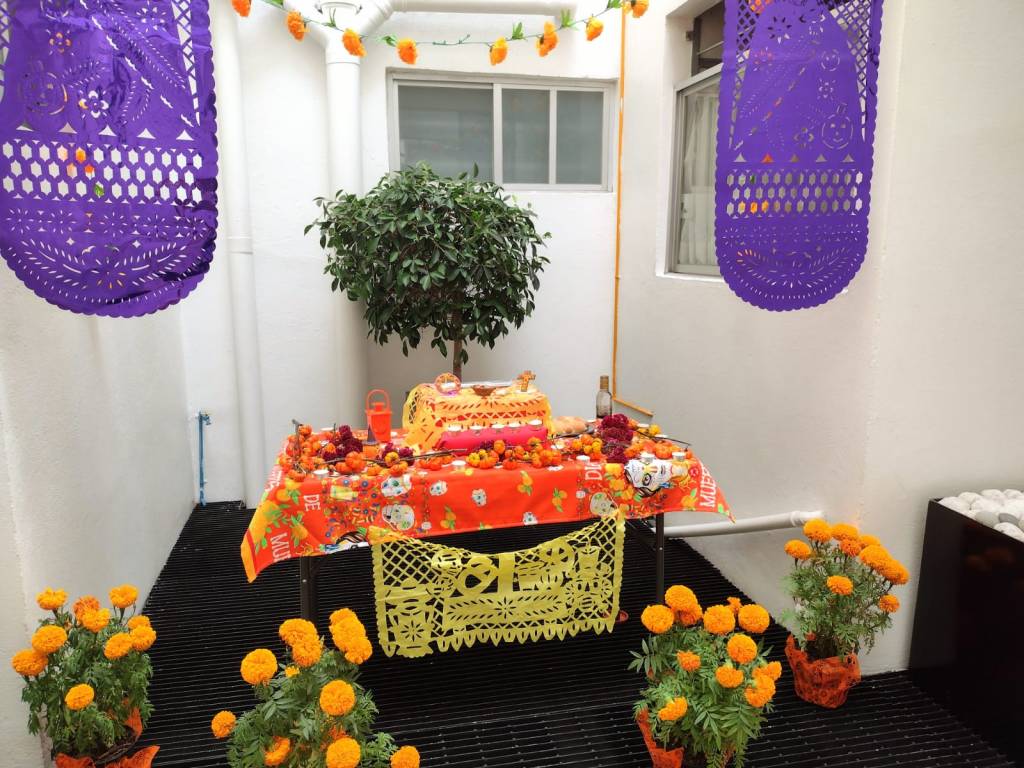
Mexico has an intricate relationship with death. Offerings in some way shape or form are presented on an DIY altar to those who have departed. When you do that, their spirit comes back to visit you. This week is celebrated with a myriad of activities all over the country. In Mexico City, parades are held downtown weeks prior to this week. Families visit their departed ones at cemetaries up to a week ahead of time, but especially on November 1st and 2nd. Altars are built in each home with traditional décor commemorating those who have died- marigolds, streamers and colorful paper, and on the altar are placed pictures and food that their loved one enjoyed. Those items also might include cigarettes, tequila, etc. Altars can go up in each home weeks before November 1st rolls around.

We live in an apartment building. Some of the neighbors decided to decorate and put up an altar in the common area of the main entrance hallway. The residents were thrilled. Decorations went up all over the place.

The university has contests to see who puts together the best altars. Students spend weeks putting them together with intrinsic details. Pictures of teachers and students who are no longer present are honored.

Picnics are held at the cemeteries. November 2nd is a national holiday–the Day of the Dead. The busy daily activities are put on pause so that the dead may be remembered and honored.

This is what students shared with us according to their family traditions:
October 28th is when you remember your pets who have died. So near the table (altar) you put out a bowl of water and bowl of their favorite food.
November 1st is when you celebrate all those who died in their childhood years.
November 2nd is when you celebrate all of those who died as adults.

You mourn for those who have died within the past year, but you have a party for those who have been dead more than a year. Special food is prepared.

It is a week where families spend each day eating together, remembering how those they loved (and are no longer with them), lived amongst them – the things they used to eat, the things they used to say, and how they influenced the living.

For some of us, this might be uncomfortable. We’ve never put up an altar in our home. We take literally what Paul says in 2 Cor. 5:8–that to be absent from the body is to be present with Christ. We don’t sit around and wait for someone’s spirit to visit us. They are with Christ.

But maybe we should start remembering more. After all, doesn’t God command his people to remember? Deut 6:12 says that we need to be careful to not forget the Lord. If we are to bear God’s image, that means we reflect His character, and we are witnesses to others of what He has done for us. Many of those who have gone on before us have done just that. Wouldn’t it be good to have a meal together with our family and remember who they were, and how they talked to us and showed us what God had done for them? Hebrews 11 does a mighty fine job of remembering people for their faith.


How about we do the same.


Esta es una semana muy importante en México. Es tan importante como Navidad, Año Nuevo y Día de la Independencia. Hemos aprendido de los universitarios qué tradiciones se mantienen con mucho respeto en cada una de sus familias.

México tiene una relación intrincada con la muerte. Se presentan ofrendas de alguna manera a aquellos que han partido. Cuando eso se hace, su espíritu vuelve a visitar. Esta semana se celebra con un sinfín de actividades en todo el país. En la Ciudad de México, los desfiles se llevan a cabo en el centro semanas antes de esta semana. Las familias visitan a sus difuntos en los cementerios hasta con una semana de anticipación, pero especialmente los días 1 y 2 de noviembre. En cada hogar se construyen altares con una decoración tradicional que conmemora a los que han muerto: caléndulas, serpentinas y papel picado de colores alegres, y en el altar se colocan fotografías y comida que disfrutó su ser querido. Esos artículos también pueden incluir cigarrillos, tequila, etc. Los altares pueden ser elaborados en cada hogar semanas antes de que llegue el 1 de noviembre.

Vivimos en un edificio de apartamentos. Algunos vecinos decidieron decorar y colocar un altar en el área común del pasillo de la entrada principal. Los vecinos estaban emocionados. Se colocaron decoraciones por todas partes.

La universidad tiene concursos para ver quién arma los mejores altares. Los estudiantes pasan semanas diseñándolos con detalles intrínsecos. Se honran profesores y estudiantes que ya no están presentes por medio de una fotografía en el altar.

Se realizan picnics en los cementerios. El 2 de noviembre es un feriado nacional: el Día de los Muertos. La vida cotidiana se pone en pausa para recordar y honrar a los muertos.

Esto es lo que los estudiantes compartieron con nosotros según sus tradiciones familiares:
El 28 de octubre es cuando recuerdas a tus mascotas que han fallecido. Cerca de la mesa (altar), colocas un recipiente con agua y un recipiente con su comida favorita.
El 1 de noviembre es cuando se celebra a todos aquellos que murieron en su infancia.
El 2 de noviembre es cuando se celebra a todos los que murieron que ya eran adultos.

Lloras por aquellos que han muerto durante el año pasado y haces una fiesta por aquellos que están muertos más de un año. Se prepara comida especial.

Es una semana en la que las familias pasan cada día comiendo juntas, recordando cómo vivían entre ellos aquellos que amaban (y que ya no están con ellos): las cosas que solían comer, las cosas que solían decir y cómo influyeron en los seres vivos.

Para algunos de nosotros, esto puede resultar incómodo. Nunca hemos puesto un altar en nuestra casa. Tomamos literalmente lo que dice Pablo en 2 Cor. 5:8- que estar ausente del cuerpo es estar presente con Cristo. No nos sentamos a esperar que el espíritu de alguien nos visite. Están con Cristo.

Pero tal vez deberíamos empezar a recordar más. Después de todo, ¿no manda Dios a su pueblo que recuerde? Deuteronomio 6:12 dice que debemos tener cuidado de no olvidarnos del Señor. Si vamos a portar imagen de Dios, eso significa que reflejamos Su carácter y somos testigos ante otros de lo que Él ha hecho por nosotros. Muchos de los que nos han precedido han hecho precisamente eso. ¿No sería bueno comer juntos con nuestra familia y recordar quiénes eran y cómo nos hablaron y nos mostraron lo que Dios había hecho por ellos? El capítulo 11 de Hebreos hace un excelente trabajo al recordar a las personas por su fe.

¿Qué tal si hacemos lo mismo?


Candies and a bracelet

Two weeks ago at church a cute little kid came up and gave me two candies. I had never tried them before. They are salty, sweet, spicy and sour, all in the same chew. I was thrilled. Mexico’s candy is usually a combination of some kind of chile powder, sugar and lime and sometimes another fruit flavor mixed in.

I went and bought a big bag of this candy and took it to the students on campus the next Thursday. We decided to have a competition as to who could keep a straight face as they chewed it. I lost. The sourness made me squirm, but with delight. Those who watched got a kick out of seeing me wrinkle up my face. It was certainly a conversation starter. I learned one more small thing about Mexican kid culture, about how they grew up, what are their favorite candies. They are always proud to share. They should be. And it is one more opportunity for me to build trust and let them know that God loves them- loves the fact that they are Mexicans who eat sweet sour spicy candies.

This week I spent time with a powerful woman of God who works among the Wixárika (Huichol) people group. She gave me a bracelet made by a woman in a start up business. For the sake of preserving their culture they rarely let an outsider in. This friend is working hard to empower women to live healthy lives and find ways to sustain their families. Little by little they are learning that God loves them, loves the fact that they value the plot of land they labor, their creativity, their pride in who they are.

The Wixárika live in parts of Nayarit, Jalisco, Durango and Zacatecas.
The UNAM is the largest university in the Americas.

I get to be at the UNAM because I understand that, people who can’t be there, send me, so that I can represent them.
My friend gets to work with the Wixárika because, people like me, can’t be there. She represents me and many others.

We all have the privilege of representing God, of modeling His character in the lives of others. He loves the whole world- every people group, every language, every culture.

Once again, thank you for sending us and for allowing us to represent you.

Cycles

The cycles in life.

You come into this world dependent on somebody older to feed you and care for you.
Jesus certainly did.


You grow and are presented with opportunities to care for others.  Yes, Jesus certainly did this as well.

And then you grow old, and life comes full circle as others care for you once again. 
Jesus looked at his disciple and said “Here is your mother”.

As missionaries, when we arrive into a new culture, a new language, a new context, we become dependent on others to survive.   Then, as we learn the language, integrate into the culture, and build bridges of trust and loyalty, we have the privilege of caring for others, of investing in others. 

But, what might not be on the radar of those who send us, is that we hope that investment will circle around back to us, and that we can watch as they in turn, invest in many more lives in their own cycle of life. 

Almost 20 years ago, when we arrived in Yucatán, we met Eliú, a young lawyer who had recently begun to follow Jesus.  We poured into his life and the Spirit showed us the potential he had.  Paul encouraged him to study Bible school and became his teacher.  He then watched Eliú continue on in ministerial preparation and taught him on the master’s level as well.  This week, both Paul and Eliú are teaching together in a post Bible school ministerial education program in Tijuana.  Pastors come from all over Mexico to study in this program called ISUM.  In our early years, Paul would sometimes also direct two of the four weeks of the module.  After almost 20 years, it is now Eliú who is teaching and directing, and Paul is under Eliú’s authority.  The student has become the teacher.  We are overjoyed. 

The medical ministry is now completely led by Mexicans.  The director is a paramedic, won to the Lord in a medical outreach 18 years ago.   Obed is now also a pastor in Tabasco and carry on this ministry with zeal.  

Both Obed and Eliú are investing in hundreds of lives across Mexico and other countries.  We get to watch that happen.  Our hearts are bursting with pride and gratitude. 

If you are still reading this, thank you.  Feel free to jump over to our latest newsletters and see how you can continue to support our ministry.  

A Continuum in Contrasts


The Ancient of Days was born a baby, defenseless, dependent. He continues to be the Ancient
of Days.

The Bread of Life came to experience hunger. He continues to be the Bread of Life.
The Light of the World was born in darkness. He continues to be the Light of the World.
The Lion of Judah is the Lamb of God.

His Face is Radiant. He had no beauty or majesty to attract us to him, nothing in his
appearance that we should desire him. He continues to have a Face that shines like the sun.
He is a Strong Tower, and He was crushed for our iniquities. He continues to be a Strong
Tower.

He is our Peace, and He was born into conflict and war. He remains our Peace.
He is the Resurrection and the Life, and he died. He continues to be our Resurrection and Life.
He knew no Sin and He took our sins upon Himself. He continues to be blameless and perfect.
He is the Living Water, and He experienced thirst. He remains the Living Water.
The Preparer of many mansions had no roof over His head. He continues to prepare.

The King of Kings and Lord of Lords became a servant. He continues to be the King of Kings
and Lord of Lords.


Colossians 1:15-20


“The Son is the image of the invisible God, the firstborn over all creation.  For in him all things
were created: things in heaven and on earth, visible and invisible, whether thrones or powers or
rulers or authorities; all things have been created through him and for him.  He is before all
things, and in him all things hold together.  And he is the head of the body, the church; he is
the beginning and the firstborn from among the dead, so that in everything he might have the
supremacy.  


For God was pleased to have all his fullness dwell in him,  and through him to reconcile to
himself all things, whether things on earth or things in heaven, by making peace through his
blood, shed on the cross.”

Website Powered by WordPress.com.

Up ↑