
This is a very important week in Mexico. It is as important as Christmas, New Years, and Independence Day. We have learned from the university students what traditions are held up with utmost respect in each of their families.
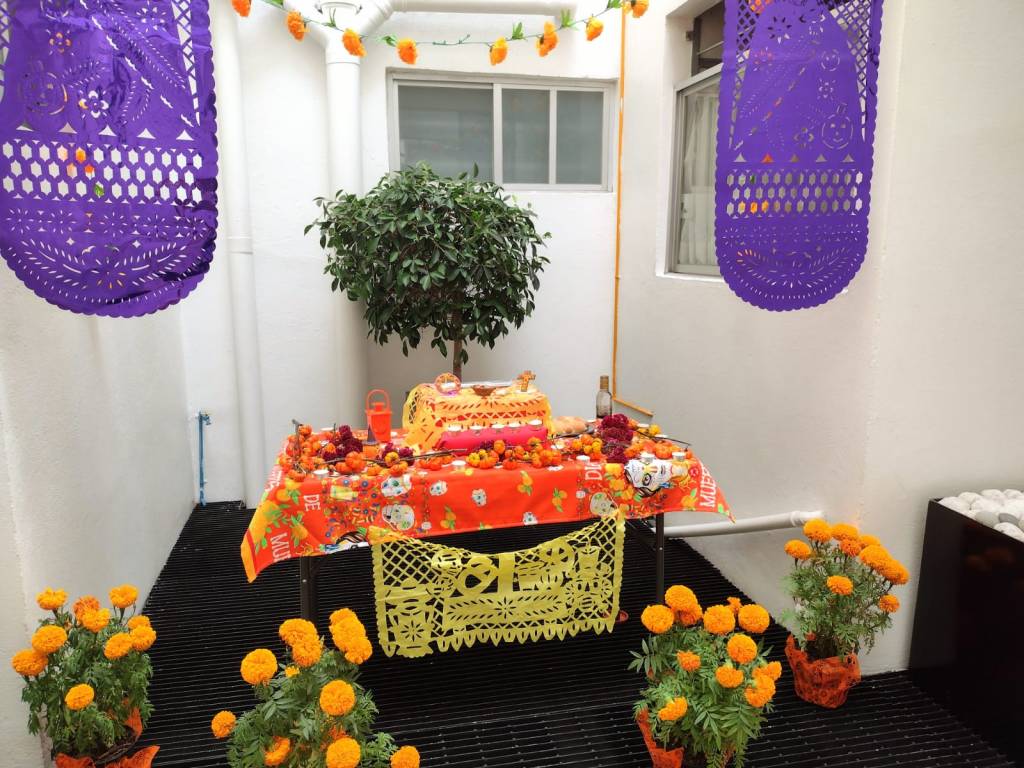
Mexico has an intricate relationship with death. Offerings in some way shape or form are presented on an DIY altar to those who have departed. When you do that, their spirit comes back to visit you. This week is celebrated with a myriad of activities all over the country. In Mexico City, parades are held downtown weeks prior to this week. Families visit their departed ones at cemetaries up to a week ahead of time, but especially on November 1st and 2nd. Altars are built in each home with traditional décor commemorating those who have died- marigolds, streamers and colorful paper, and on the altar are placed pictures and food that their loved one enjoyed. Those items also might include cigarettes, tequila, etc. Altars can go up in each home weeks before November 1st rolls around.
We live in an apartment building. Some of the neighbors decided to decorate and put up an altar in the common area of the main entrance hallway. The residents were thrilled. Decorations went up all over the place.
The university has contests to see who puts together the best altars. Students spend weeks putting them together with intrinsic details. Pictures of teachers and students who are no longer present are honored.
Picnics are held at the cemeteries. November 2nd is a national holiday–the Day of the Dead. The busy daily activities are put on pause so that the dead may be remembered and honored.
This is what students shared with us according to their family traditions:
October 28th is when you remember your pets who have died. So near the table (altar) you put out a bowl of water and bowl of their favorite food.
November 1st is when you celebrate all those who died in their childhood years.
November 2nd is when you celebrate all of those who died as adults.
You mourn for those who have died within the past year, but you have a party for those who have been dead more than a year. Special food is prepared.
It is a week where families spend each day eating together, remembering how those they loved (and are no longer with them), lived amongst them – the things they used to eat, the things they used to say, and how they influenced the living.
For some of us, this might be uncomfortable. We’ve never put up an altar in our home. We take literally what Paul says in 2 Cor. 5:8–that to be absent from the body is to be present with Christ. We don’t sit around and wait for someone’s spirit to visit us. They are with Christ.
But maybe we should start remembering more. After all, doesn’t God command his people to remember? Deut 6:12 says that we need to be careful to not forget the Lord. If we are to bear God’s image, that means we reflect His character, and we are witnesses to others of what He has done for us. Many of those who have gone on before us have done just that. Wouldn’t it be good to have a meal together with our family and remember who they were, and how they talked to us and showed us what God had done for them? Hebrews 11 does a mighty fine job of remembering people for their faith.
How about we do the same.
Esta es una semana muy importante en México. Es tan importante como Navidad, Año Nuevo y Día de la Independencia. Hemos aprendido de los universitarios qué tradiciones se mantienen con mucho respeto en cada una de sus familias.
México tiene una relación intrincada con la muerte. Se presentan ofrendas de alguna manera a aquellos que han partido. Cuando eso se hace, su espíritu vuelve a visitar. Esta semana se celebra con un sinfín de actividades en todo el país. En la Ciudad de México, los desfiles se llevan a cabo en el centro semanas antes de esta semana. Las familias visitan a sus difuntos en los cementerios hasta con una semana de anticipación, pero especialmente los días 1 y 2 de noviembre. En cada hogar se construyen altares con una decoración tradicional que conmemora a los que han muerto: caléndulas, serpentinas y papel picado de colores alegres, y en el altar se colocan fotografías y comida que disfrutó su ser querido. Esos artículos también pueden incluir cigarrillos, tequila, etc. Los altares pueden ser elaborados en cada hogar semanas antes de que llegue el 1 de noviembre.
Vivimos en un edificio de apartamentos. Algunos vecinos decidieron decorar y colocar un altar en el área común del pasillo de la entrada principal. Los vecinos estaban emocionados. Se colocaron decoraciones por todas partes.
La universidad tiene concursos para ver quién arma los mejores altares. Los estudiantes pasan semanas diseñándolos con detalles intrínsecos. Se honran profesores y estudiantes que ya no están presentes por medio de una fotografía en el altar.
Se realizan picnics en los cementerios. El 2 de noviembre es un feriado nacional: el Día de los Muertos. La vida cotidiana se pone en pausa para recordar y honrar a los muertos.
Esto es lo que los estudiantes compartieron con nosotros según sus tradiciones familiares:
El 28 de octubre es cuando recuerdas a tus mascotas que han fallecido. Cerca de la mesa (altar), colocas un recipiente con agua y un recipiente con su comida favorita.
El 1 de noviembre es cuando se celebra a todos aquellos que murieron en su infancia.
El 2 de noviembre es cuando se celebra a todos los que murieron que ya eran adultos.
Lloras por aquellos que han muerto durante el año pasado y haces una fiesta por aquellos que están muertos más de un año. Se prepara comida especial.
Es una semana en la que las familias pasan cada día comiendo juntas, recordando cómo vivían entre ellos aquellos que amaban (y que ya no están con ellos): las cosas que solían comer, las cosas que solían decir y cómo influyeron en los seres vivos.
Para algunos de nosotros, esto puede resultar incómodo. Nunca hemos puesto un altar en nuestra casa. Tomamos literalmente lo que dice Pablo en 2 Cor. 5:8- que estar ausente del cuerpo es estar presente con Cristo. No nos sentamos a esperar que el espíritu de alguien nos visite. Están con Cristo.
Pero tal vez deberíamos empezar a recordar más. Después de todo, ¿no manda Dios a su pueblo que recuerde? Deuteronomio 6:12 dice que debemos tener cuidado de no olvidarnos del Señor. Si vamos a portar imagen de Dios, eso significa que reflejamos Su carácter y somos testigos ante otros de lo que Él ha hecho por nosotros. Muchos de los que nos han precedido han hecho precisamente eso. ¿No sería bueno comer juntos con nuestra familia y recordar quiénes eran y cómo nos hablaron y nos mostraron lo que Dios había hecho por ellos? El capítulo 11 de Hebreos hace un excelente trabajo al recordar a las personas por su fe.
¿Qué tal si hacemos lo mismo?


This a very interesting custom. I like the idea of having a special time to honor and share memories of our loved ones who are now with the Lord and cheering us all on! It’s comforting to think of them rejoicing, at rest and completely whole looking forward to that Great Day when we all gather around the Throne of God rejoicing in His perfect love!!!
LikeLike
This a very interesting custom. I like the idea of having a special time to honor and share memories of our loved ones who are now with the Lord and cheering us all on! It’s comforting to think of them rejoicing, at rest and completely whole looking forward to that Great Day when we all gather around the Throne of God rejoicing in His perfect love!!!
LikeLike